
Born at a Kitchen Table. Built in Texas.
Born at a Kitchen Table. Built in Texas.
Add description, images, menus and links to your mega menu
A column with no settings can be used as a spacer
Link to your collections, sales and even external links
Add up to five columns
Add description, images, menus and links to your mega menu
A column with no settings can be used as a spacer
Link to your collections, sales and even external links
Add up to five columns
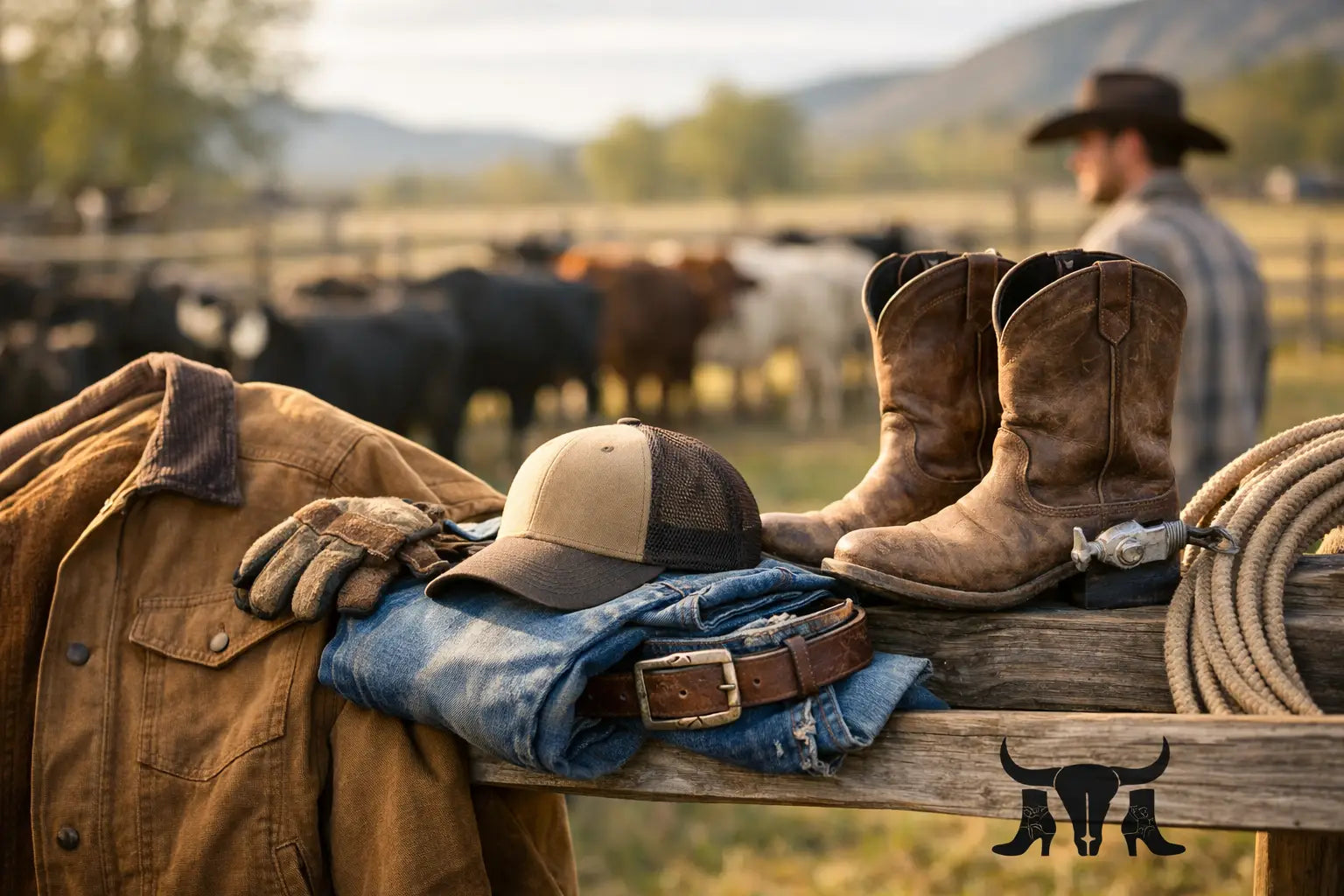

Best Clothes for Ranch Work That Hold Up
May 07, 2026 6 min read
Sunup on a ranch does not care what looks good on a hanger. It cares whether your shirt can take brush, whether your jeans still move after ten hours in the saddle, and whether your jacket blocks wind without turning stiff as a board. That is what clothes for ranch work are really about - gear that earns its keep.
A lot of people get this wrong because they shop for a western look instead of a working uniform. Ranch clothes are not costume. They are tools. The right setup keeps you moving, keeps you safer, and saves money over time because you are not replacing blown seams and paper-thin fabric every season.
What good clothes for ranch work actually need to do
Ranch work is hard on everything. Fences snag sleeves. Saddle leather rubs through cheap denim. Sun beats down all afternoon, then a cold front rolls in before dark. You might feed, brand, sort cattle, mend gates, haul hay, and still need to head into town without changing three times.
That means your clothing has to cover more than one job. It needs durability first, but not at the expense of movement. A shirt that binds at the shoulders is no good, no matter how tough the fabric is. The same goes for jeans that look heavy-duty but ride up, twist, or pinch when you swing a leg over a horse.
Good ranch wear also has to manage weather. Breathability matters in Texas heat. Layering matters when the morning starts cold and the afternoon turns hot. Water resistance helps, but full waterproof gear is not always the answer if it makes you sweat out by noon. Like most things on a ranch, the right choice depends on the work, the season, and the country you are in.
Start with shirts built for ranch work
A work shirt takes more abuse than most people realize. It gets dragged against panels, soaked with sweat, baked in the sun, and washed hard. That is why fabric matters more than fancy details.
For everyday use, a sturdy cotton shirt still earns its place. It breathes well, feels right in the heat, and gets better with wear if the construction is solid. But pure cotton has a trade-off. Once it is wet, it stays wet longer. On cooler days or during high-output work, that can turn into a problem.
That is where blends can make sense. A cotton blend with a little stretch gives you better mobility and can dry faster. For some ranch hands, that extra flex through the back and shoulders is worth more than old-school stiffness. For others, especially around sparks, welding, or heavy brush, they may still prefer a heavier natural fabric. It depends on the job.
Long sleeves are usually the smarter call, even in warm weather. They protect your arms from sun, thorns, rope burn, and whatever else the day throws at you. A good sleeve rolled down beats sunscreen that wore off by ten in the morning.
Fit matters too. Too loose and you snag on everything. Too tight and you fight your clothes all day. You want room through the shoulders, enough length to stay tucked if needed, and cuffs that work with gloves and layers.
Jeans and pants that can take a beating
If there is one place cheap clothing gives itself away fast, it is in the seat, knees, and inseam. Ranch work destroys weak denim. That is why heavier jeans remain a staple for a reason.
The best jeans for ranch work balance toughness with mobility. Heavy denim stands up to wear, but if it is cut wrong, it will fight you every time you mount up, squat down, or climb into a truck. A relaxed fit through the seat and thigh usually works better than anything too slim or fashion-cut. Western work is not kind to trendy fits.
Rise matters more than some folks think. A mid or higher rise often works better for riding and bending because it stays where it should. Low-rise jeans may look fine standing still, but they stop being practical the minute the work starts.
Double-knee work pants can also make sense, especially if you spend more time fixing equipment, working on the ground, or doing trade work around the ranch. They are not always the best choice in the saddle, though, because extra bulk can rub or feel stiff. Again, it depends on whether your day is horse-heavy, equipment-heavy, or a mix of both.
Outerwear has one job - don’t get in the way
A ranch jacket should block wind, hold up to abuse, and still let you move. That sounds simple until you put on one that looks rugged and feels like a tarp.
The best outerwear for ranch work is cut for action. You need reach through the arms, enough room for layering, and a length that covers without bunching in the saddle or catching on equipment. Canvas jackets, insulated vests, chore coats, and weather-resistant shells all have a place, but not every piece belongs in every season.
Canvas is hard to beat for rough work. It stands up to abrasion and keeps its shape. The downside is that some canvas jackets need breaking in, and some are too warm for all-day wear in milder weather. A vest solves part of that problem by keeping your core warm while freeing up your arms. For a lot of ranchers, that makes a vest the handiest cold-weather layer on the place.
When rain enters the picture, people often reach for the heaviest waterproof shell they can find. Sometimes that works. Sometimes it just turns into a sweat box. Light water resistance is often better for active ranch work unless you are stuck in steady rain for hours.
Don’t overlook base layers and cold-weather pieces
Most people talk about jackets first, but cold-weather comfort starts under the jacket. A good base layer can make more difference than a bulky coat.
For cold mornings, a fitted thermal or moisture-managing long-sleeve layer helps regulate body temperature without adding unnecessary bulk. That matters when you are moving from feeding to fencing to loading without much downtime. Bulky layers can make you warm standing still and miserable once you start working.
Hoodies have their place too, especially for lighter work and everyday wear, but they are not always ideal under heavier coats or around machinery where extra fabric gets in the way. A quarter-zip pullover or structured work shirt jacket is often cleaner and easier to layer.
Boots, gloves, and the pieces that finish the job
Clothes for ranch work are not just shirts and jeans. The gear around them matters just as much.
Boots have to match the work. Riding boots make sense in the saddle. Pull-on work boots with good support make sense for long hours on the ground. Some folks need one pair for both, but that can be a compromise. A boot that excels at riding may not be the one you want for mud, concrete, and walking fence line all day.
Gloves are another thing people treat as optional until their hands pay for it. Wire, rope, cold mornings, and rough surfaces all demand hand protection. The right glove should give you grip and enough feel to still do real work. Too bulky and you lose dexterity. Too thin and they tear before lunch.
A good hat earns its place too, whether it is a cap for daily grind or a brimmed hat for real sun coverage. On a ranch, shade is not a style choice. It is part of getting through the day.
How to build a practical ranch work wardrobe
The smartest ranch wardrobe is not huge. It is dependable. A few solid shirts, several pairs of hard-wearing jeans or work pants, outerwear for changing conditions, and the right accessories will carry more weight than a closet full of gear that only looks the part.
Buy for repetition. Can you wear it three days this week for three different jobs? Can it layer well? Can it handle dust, sun, and hard washing? If the answer is no, it probably does not belong in a working lineup.
This is where authentic western brands still matter. Not because of a logo, but because some companies understand that western wear is supposed to work first. Horns & Heels Rodeo Company is built around that same idea - real gear for people who live the life, not folks trying it on for the weekend.
What to avoid when buying ranch clothes
The biggest mistake is buying on looks alone. Lightweight fashion denim, stiff shirts with poor mobility, and outerwear made for a quick photo instead of a full day outside will let you down fast.
You should also be careful with anything overly trendy in fit or fabric. Ranch work exposes weakness in a hurry. Decorative stitching, thin materials, and cuts designed for town more than work usually do not survive real use.
Price can fool people too. Cheap gear often costs more because you replace it constantly. But expensive does not always mean better either. The best value is gear you forget about while you work because it does what it is supposed to do.
The right ranch clothes should feel like part of the job, not something you are babysitting all day. If your shirt pulls, your jeans bind, or your jacket slows you down, it is not built for the life. Buy clothes that can take dirt, weather, wire, and long miles without asking for special treatment. Ranch work is hard enough already. Your gear should make it easier, not louder.
Subscribe
Sign up to get the latest on sales, new releases and more …