
Born at a Kitchen Table. Built in Texas.
Born at a Kitchen Table. Built in Texas.
Add description, images, menus and links to your mega menu
A column with no settings can be used as a spacer
Link to your collections, sales and even external links
Add up to five columns
Add description, images, menus and links to your mega menu
A column with no settings can be used as a spacer
Link to your collections, sales and even external links
Add up to five columns

Best Shirts for Ranchers That Hold Up
May 11, 2026 6 min read
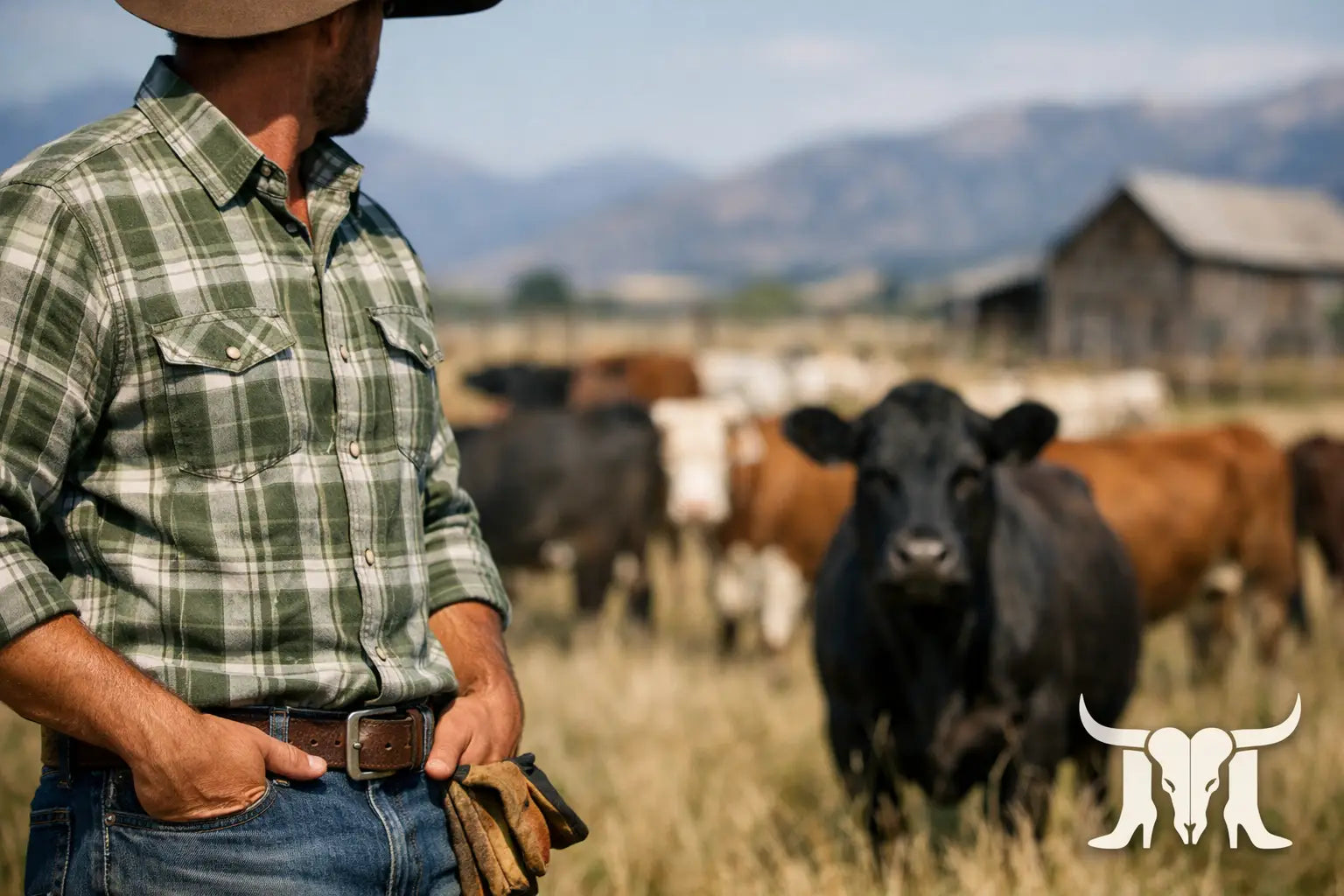
Sunup comes early, and a ranch shirt starts working before the coffee does. The best shirts for ranchers are not the ones that look good on a hanger. They are the ones you can wear through dust, sweat, barbed wire, sun, and a long ride, then still button up to head into town without looking worn out.
That is the difference between western style and working western gear. A good ranch shirt has to earn its place. It needs to move when you throw a leg over, hold up when you are fixing fence, breathe in August heat, and layer easy when the north wind comes in hard. If a shirt cannot do that, it belongs in the closet, not on the ranch.
What makes the best shirts for ranchers
A rancher does not need a shirt built for one perfect photo. He needs one built for real miles. That starts with fabric, because fabric decides how a shirt feels at daylight and how it holds up by quitting time.
Cotton still has a rightful place. It is breathable, familiar, and comfortable against the skin, especially in dry heat. The trade-off is that plain lightweight cotton can soak up sweat and stay wet longer than you want. On a cooler day or for general ranch wear, that may not matter much. In the dead heat of summer, it can.
Blended fabrics earn their keep when the workday gets rough. A cotton blend with a little stretch moves better through the shoulders and back, which matters when you are lifting feed, swinging gates, or roping. Some ranchers avoid anything that sounds too technical, and fair enough - not every performance shirt is worth a dime. But the right blend can give you better range of motion and faster drying without losing that western feel.
Weight matters too. A shirt that is too heavy will wear you out in warm weather. Too light, and it may not last a season if you are hard on gear. Midweight shirts usually hit the sweet spot for year-round use, while lighter shirts make more sense for high summer and heavier options work better for cold mornings and layering.
Fit matters more than most people admit
A bad fit will make a good fabric feel wrong. Ranch work asks a lot from a shirt, and if it binds under the arms or pulls across the back, you will feel it every time you reach, ride, or bend.
The best fit for ranch work is usually trim enough not to catch on everything, but not so tight that it restricts movement. A little extra room through the shoulders is worth more than a fashionable cut. Longer tails matter too. A shirt that constantly comes untucked when you are in the saddle gets old fast.
Sleeve length is another detail people overlook. Sleeves should give you coverage from brush, sun, and rope burn without bunching so much at the cuff that they get in the way. Adjustable cuffs help, especially when the day starts cold and warms up quick.
The fabrics that work best on a ranch
Cotton for everyday comfort
If you want a shirt that feels broken-in and dependable, cotton is hard to beat. It wears easy, breathes well, and fits naturally into ranch life. For general chores, branding days in decent weather, and everyday wear, a solid cotton shirt still makes sense.
The catch is durability depends on the weave and weight. A flimsy cotton shirt may feel good in the store, but it can give up early at the elbows, cuffs, or seams. Tighter weaves and heavier construction usually last longer.
Cotton blends for movement and heat
A little stretch can make a long day easier. Cotton blended with polyester or a touch of spandex often dries faster and moves better than traditional woven cotton. That can be a real advantage in hot weather, especially if you are in and out of the truck, on horseback, and working pens in the same day.
There is a trade-off here too. Some blends lose that classic western hand feel and can look too slick or synthetic. The best ones still feel grounded, not like gym wear pretending to be ranch gear.
Denim and chambray for tougher wear
When you need more grit, denim and chambray still carry weight. Chambray gives you a lighter option with the look and feel of work-ready western wear. Denim shirts bring more structure and abrasion resistance, which can be useful in cooler weather or heavier work.
The downside is simple - they can get hot, and they are not always the best call in peak summer. But when temperatures drop or the work gets rough, they are hard to argue with.
Features ranchers should actually care about
Some shirt details are useful. Some are decoration. On a ranch, that line gets pretty clear.
Pearl snaps or snaps in general are popular for a reason. They are fast, easy to work with one hand, and safer than hard buttons if you get hung up. Traditional buttons still have their place, especially on work shirts with solid construction, but snaps remain a favorite for working western wear because they are practical, not just classic.
Chest pockets matter if you actually use them. A pocket that can hold a notepad, tag marker, or small essentials without sagging is worth having. If the pockets are too shallow or too loose, they are just there for looks.
Ventilation can help in hot climates, but it depends on how it is built. Mesh-lined back vents can make a shirt cooler, though some ranchers prefer a cleaner, more traditional design. If you are working through Texas heat, airflow is not a gimmick. If the venting makes the shirt feel flimsy, then it is not built right.
Sun protection is another feature worth paying attention to, especially for long days outside. Long sleeves remain one of the simplest and best tools for keeping the sun off your back and arms. A lightweight long-sleeve shirt often beats a short-sleeve one once the heat and sun both get serious.
Best shirts for ranchers by season
Summer
In summer, lighter weight fabrics, breathable weaves, and a fit that does not cling are what matter most. Long sleeves still make sense, but the fabric needs to breathe and dry reasonably fast. This is where a good cotton blend often beats heavier traditional shirts.
Fall and spring
These are the easiest seasons to dress for, and probably where a dependable midweight western shirt earns the most wear. You need enough structure for wind and cool mornings, but enough comfort to keep it on all day. This is where classic cotton twill, chambray, and tougher blends shine.
Winter
Cold weather ranch shirts need to layer well without turning your shoulders into a straightjacket. Heavier brushed cotton, flannel-lined options, or denim shirts can work, especially under a vest or jacket. The key is mobility. Warmth is no good if you cannot move in it.
Work shirts versus going-to-town shirts
Most ranchers know the difference without saying it out loud. Some shirts are for hard use. Some are for church, dinner, the sale barn, or town. The smart move is having both, but the best shirts for ranchers often blur that line.
A well-made western shirt should be tough enough to handle real work and clean up well enough to wear off the ranch. That does not mean flashy embroidery or overbuilt fashion details. It means solid construction, a clean fit, and materials that age with character instead of falling apart.
That is where brands rooted in real western life tend to get it right. They understand that ranch wear is not a costume. It is daily gear. Horns & Heels Rodeo Company speaks to that kind of customer because the standard is not trend-driven western style. It is gear that respects the people who actually live this life.
How to tell if a shirt will hold up
You can learn a lot before you ever wear it. Look at the seams first. Clean stitching, reinforced stress points, and a collar that holds its shape are all good signs. Then check the fabric in your hands. If it feels thin in a bad way or the snaps and cuffs feel cheap, it probably will not improve with time.
Try the movement test too. Reach forward, raise your arms, and mimic the motions of real work. If the shirt pulls hard across the back or rides up too much, leave it there. A ranch shirt should work with you, not fight you all day.
Price matters, but value matters more. A cheap shirt that tears early is expensive in the long run. A better-made shirt that gives you season after season usually pays for itself.
The right ranch shirt is not about chasing the latest look. It is about finding one that can handle the land, the weather, and the work without asking for special treatment. When a shirt does that, you do not think much about it - and that is about the highest praise working gear can get.
Subscribe
Sign up to get the latest on sales, new releases and more …