
Born at a Kitchen Table. Built in Texas.
Born at a Kitchen Table. Built in Texas.
Add description, images, menus and links to your mega menu
A column with no settings can be used as a spacer
Link to your collections, sales and even external links
Add up to five columns
Add description, images, menus and links to your mega menu
A column with no settings can be used as a spacer
Link to your collections, sales and even external links
Add up to five columns
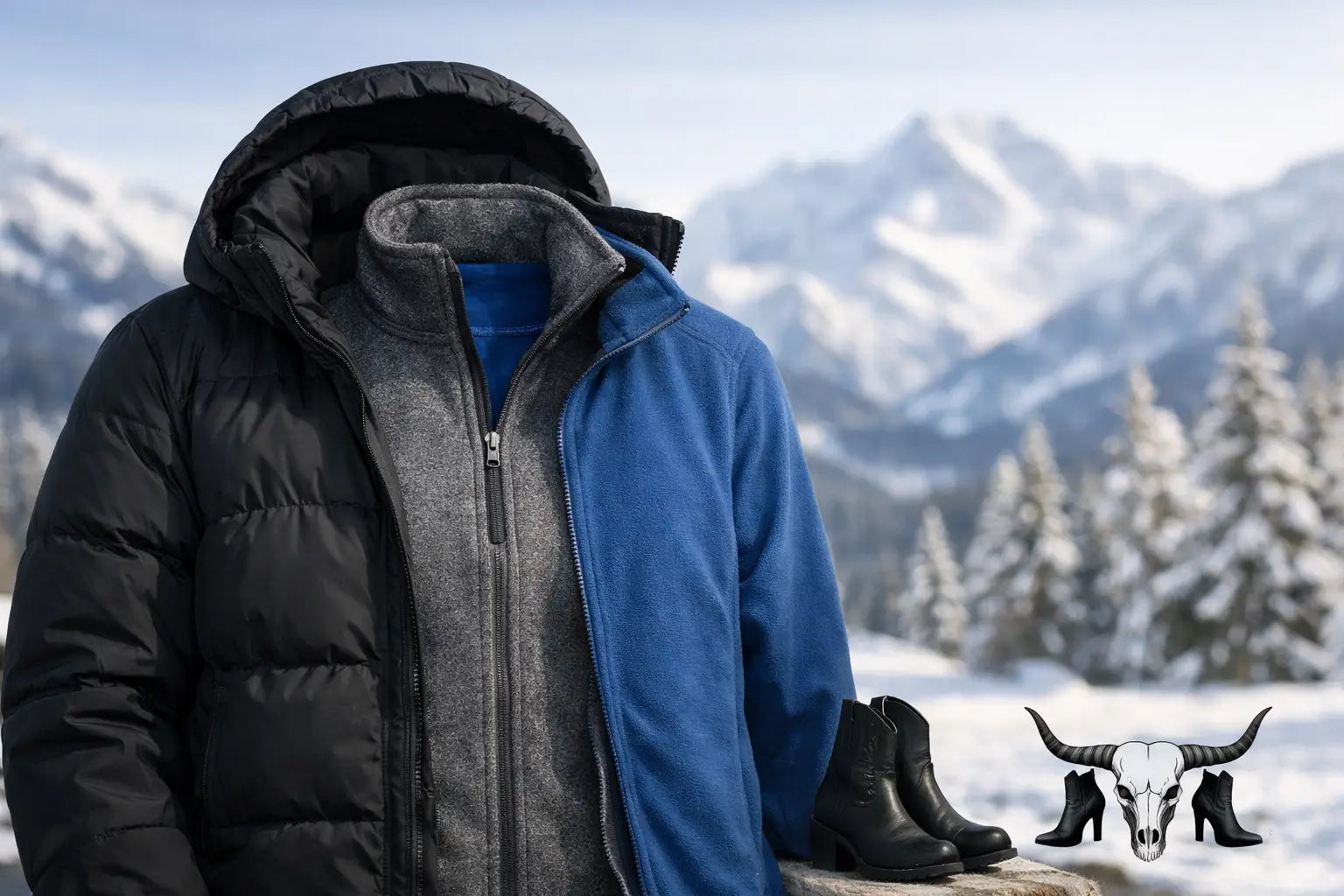

Best Western Layers for Winter That Work
July 04, 2026 6 min read
Cold hits different when you are feeding before daylight, loading up for a jackpot, or walking into town with north wind cutting across the lot. The best western layers for winter are not about looking the part. They are about staying warm without getting bulky, keeping your shoulders free, and wearing gear that still feels right in the saddle, on the ranch, or in the shop.
That is where a lot of winter clothing misses the mark. Plenty of cold-weather gear is warm enough standing still, but too stiff, too slick, or too heavy once real work starts. Good western layering has to do more than trap heat. It has to move, breathe, and hold up through long days that start cold, warm up by noon, and drop hard again after sunset.
What makes the best western layers for winter
The right layer system starts with one simple idea: every piece should earn its place. If a shirt bunches under a vest, if a hoodie grabs under a jacket, or if a coat is so thick you cannot rope, drive, or lift easy, it is not doing the job.
Western winter gear works best when each layer has a clear purpose. Your base layer manages sweat. Your middle layer holds warmth. Your outer layer blocks wind, light moisture, and abrasion. Miss one of those jobs, and you feel it fast.
Fit matters just as much as fabric. A western cut should leave room to move through the shoulders and arms without hanging sloppy. That balance is what keeps a jacket useful in the real world instead of becoming something you leave on the truck seat.
Start with a base layer that handles sweat
Most folks think winter starts with the jacket. It starts with what sits against your skin. If that layer gets damp and stays damp, the cold finds you sooner than you expect.
A solid base layer for western wear should be light, close enough to the body to work under other pieces, and comfortable for a full day. Long-sleeve tees and performance shirts both have their place. Cotton can feel familiar and comfortable, especially for lighter cold, but once you are working hard and sweating, it can hold moisture longer. Performance blends tend to do a better job when the day includes labor, changing temps, or time in and out of the wind.
For milder winter days, a sturdy long-sleeve shirt under a hoodie or vest may be enough. For harder cold, especially in dry wind, a thermal-style layer gives you more heat without adding much bulk.
The middle layer is where real warmth lives
If the base layer keeps you dry, the middle layer is what keeps you warm. This is where western winter dressing gets practical fast.
A good hoodie is hard to beat for everyday wear. It is easy, dependable, and built for motion. It works under a heavier jacket, over a long-sleeve tee, or on its own during those in-between hours when the sun is up but the air still bites. The trade-off is bulk. Some hoodies stack well under outerwear, while others bunch at the shoulders and neck.
Quarter-zips and heavier pullovers can work the same way, especially if you want a cleaner fit under a coat. They are often easier to layer than a thick hooded sweatshirt, particularly if you know your outer layer already has a structured collar.
Button-up western shirts also deserve more credit in winter. A heavier flannel or lined work shirt can function as a true mid-layer, not just a style piece. It gives you warmth, keeps the western look honest, and usually wears better through daily use than lightweight fashion flannels. If you spend part of the day indoors and part outdoors, this kind of layer is especially useful because it does not feel overbuilt once you step inside.
Why vests still earn their spot
A vest is one of the smartest pieces in a western winter setup because it warms your core without locking up your arms. That matters whether you are riding, hauling, fixing fence, or just getting through a long cold day where full mobility still counts.
For a lot of western folks, a vest is the first layer grabbed in the morning and the last one taken off at night. It is easy to throw over a hoodie, over a flannel, or under a jacket when the weather turns worse. That kind of flexibility makes it more than a filler piece.
There is a trade-off, of course. In severe cold or hard wind, a vest alone will not carry the load. Your arms and shoulders will still feel it. But for active days, especially when you know you will heat up once work starts, a vest often hits the sweet spot better than a heavy coat.
Outerwear should block weather, not movement
The outer layer is the shell that takes the beating. It is there for wind, cold, brush, dust, and the kind of winter weather that changes by the hour. But if that shell is too bulky or stiff, it can make the whole system feel wrong.
The best western layers for winter usually finish with a jacket that has structure without feeling like armor. Canvas, duck, and tough workwear fabrics are common for a reason. They stand up to abuse and hold their shape. Insulated jackets bring more warmth, but the amount of insulation matters. Too much, and you lose range of motion. Too little, and the wind cuts right through.
For active outdoor work, lighter insulated jackets often beat oversized heavy coats. They let you layer underneath based on the day instead of betting everything on one giant piece. For slower days, colder nights, or sitting at an event, a heavier coat may make more sense.
That is the key with winter outerwear: it depends on what the day asks from you. Ranch work, hauling, and chores need mobility. Long hours outside with less movement need more insulation. One jacket rarely does both perfectly.
How to build a western winter layering system
The easiest way to think about winter layers is by activity, not just temperature. A 35-degree morning feels different if you are horseback, on foot, in a truck, or under arena lights after dark.
For active work in cold weather, start with a performance or thermal base, add a medium-weight hoodie or flannel, and finish with a vest or light insulated jacket. This setup gives you room to adjust once your body heats up.
For long outdoor days with less movement, build more warmth into the middle and outer layers. A thermal shirt, heavier hoodie, and insulated jacket usually make more sense than trying to rely on one thin shell.
For rodeo nights or town wear, function still matters, but comfort and clean fit matter too. A solid long-sleeve base, western button-up or hoodie, and a well-cut jacket or vest usually gets it done without looking overbuilt.
Best western layers for winter by piece
If you are choosing where to invest first, start with the layers you will wear most. That usually means a dependable base shirt, a heavyweight hoodie or flannel, a vest, and one hard-wearing jacket.
A strong base shirt matters because it touches every cold-weather outfit. A dependable hoodie earns its keep because it works across ranch, road, and arena. A vest gives you the most flexibility. And a durable jacket finishes the job when weather turns serious.
Not every closet needs five winter coats. Most folks are better served by fewer pieces that layer well together than by a pile of bulky outerwear that only works in one situation.
Common mistakes that make winter gear fail
The biggest mistake is dressing for the first ten minutes of the day. If you layer too heavy from the start, you sweat early, then get cold later. Good winter wear should let you regulate, not trap you.
The second mistake is choosing bulk over movement. A thick coat may feel warm in the store, but if it rides up, binds your shoulders, or makes daily work harder, you will stop wearing it.
The third is buying western-looking gear that is not built for western use. There is a difference between apparel made for real wear and apparel made to imitate the lifestyle. The right pieces show up in the fit, the fabric, and how they hold up after repeated use.
That is why brands rooted in the culture matter. When a company understands ranch life, rodeo miles, and blue-collar wear, the gear tends to make better sense. Horns & Heels Rodeo Company speaks to that straight on - western clothing should work first and look right because it belongs there.
Fit, fabric, and weather all matter more than trends
Winter style changes. Cold does not. The pieces worth keeping are the ones that carry you through more than one season and more than one kind of day.
Look for layers that sit clean without being tight, fabrics that can take wear, and combinations you can actually adjust as the weather changes. A good winter system should serve you at sunrise, still work by noon, and not leave you freezing after dark.
The best western layers for winter are the ones you reach for without thinking because they have already proved themselves. When your gear moves right, wears hard, and keeps you warm where it counts, winter quits being something you fight and turns into just another part of the job.
Subscribe
Sign up to get the latest on sales, new releases and more …