
Born at a Kitchen Table. Built in Texas.
Born at a Kitchen Table. Built in Texas.
Add description, images, menus and links to your mega menu
A column with no settings can be used as a spacer
Link to your collections, sales and even external links
Add up to five columns
Add description, images, menus and links to your mega menu
A column with no settings can be used as a spacer
Link to your collections, sales and even external links
Add up to five columns
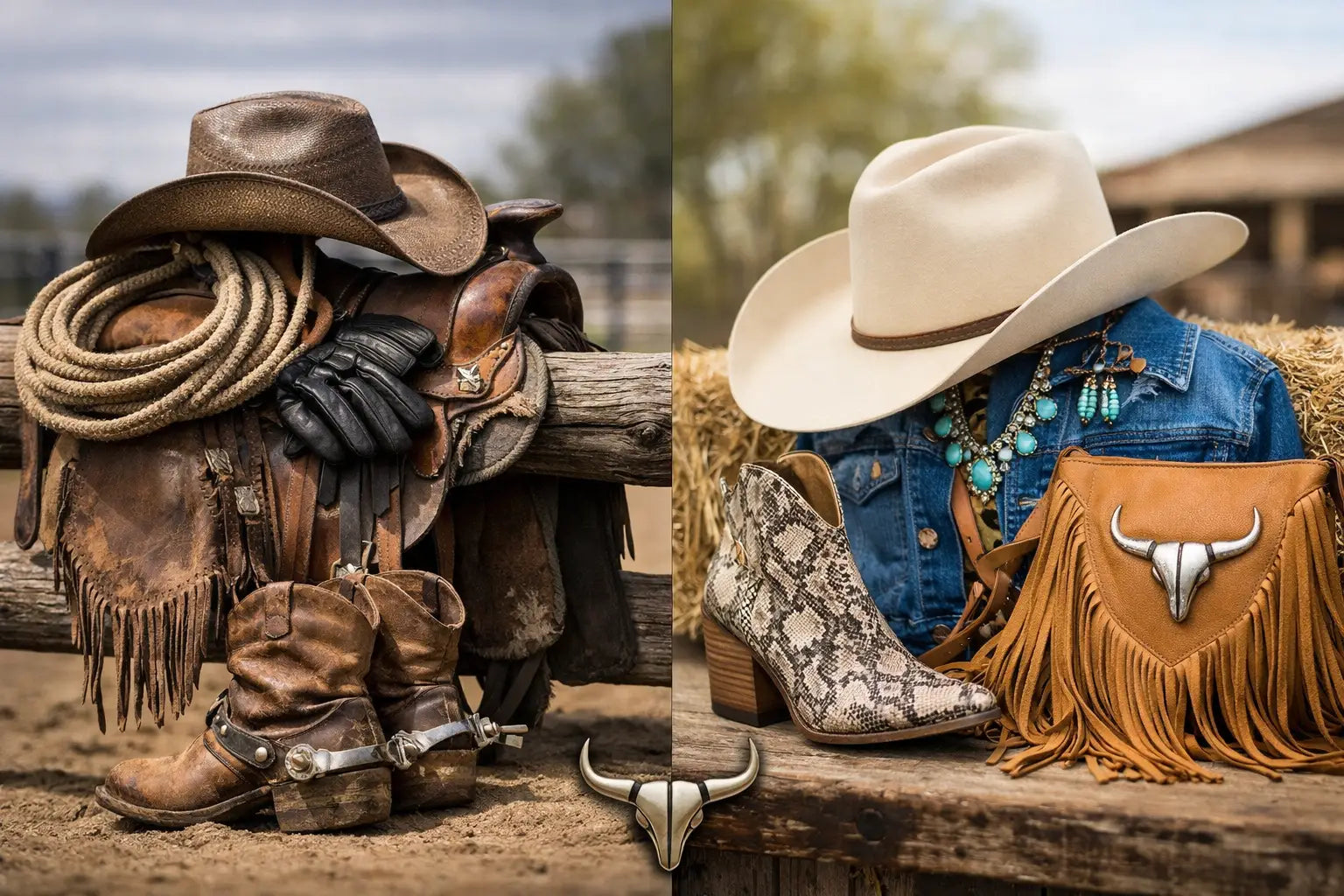

Rodeo Wear vs Western Fashion
June 10, 2026 6 min read
Walk into any feed store, rodeo lot, or small-town café in Texas and you can spot the difference fast. The conversation around rodeo wear vs western fashion is not really about who owns boots and a hat. It is about whether your clothes are built for a life that includes dust, sweat, weather, long days, and a whole lot of movement - or whether they are built to look western for a few hours.
That difference matters. For people who rope, ride, haul, brand, weld, ranch, and work with their hands, western style has never been a costume. It is tied to function, identity, and respect for the lifestyle. When fashion borrows the look without carrying the purpose, the gap gets pretty obvious.
Rodeo wear vs western fashion starts with purpose
The clearest line between rodeo wear and western fashion is simple - one is made to perform, and the other is often made to be seen.
Rodeo wear is built around what the day demands. Shirts need room through the shoulders. Denim needs to hold up in the saddle and on the ground. Jackets and vests need to layer without bunching or restricting movement. Hats need to do more than finish an outfit. They block sun, shed weather, and stay part of the job.
Western fashion, on the other hand, often starts with appearance. That does not make it wrong. A clean-cut pearl snap in town, a sharp statement jacket, or a trend-driven fringe piece can all have their place. But the design priority is different. In many fashion-first pieces, the western influence is visual before it is practical.
That is where people outside the culture sometimes miss the point. Looking western and living western are not the same thing.
What makes rodeo wear real
Real rodeo wear earns its place because it can take a beating. It is not precious. It is meant to be worn hard and worn often.
A good rodeo shirt is not just about snaps and yokes. It needs a cut that moves with you when you reach, rope, lift, and ride. A hoodie or jacket cannot just look tough on a hanger. It needs to hold up on early mornings, windy nights, and long stretches outside. Even a basic T-shirt matters more than people think. If it twists, shrinks badly, or wears out after a few washes, it is not made for the lifestyle.
Durability is only part of it. Rodeo wear also carries a certain honesty. It usually avoids trying too hard. The best pieces have grit because they come from a culture that values hard work over showmanship. Sure, rodeo has flash in the arena. But even then, the gear still has a job to do.
That is why authentic western brands tend to focus on quality materials, dependable construction, and wearability across real settings. From the truck to the arena to town, the clothing has to make sense.
Function shows up in the details
People who actually wear western gear every day notice the details right away. They know if a shirt rides up when you move. They know if a jacket binds at the elbows. They know if a hat is all shape and no substance.
In rodeo wear, details are there for a reason. Cuts are made for motion. Layers are built for changing weather. Fabrics are chosen because they can handle dirt, repetition, and real use. Even the fit tends to reflect the work. It needs to feel right when you are doing something, not just when you are standing still.
Fashion-inspired western wear can copy the outline, but it often misses that deeper logic.
Western fashion is not the enemy
It is easy to take a hard line here, but the truth is more nuanced. Western fashion is not automatically fake, and rodeo wear is not the only valid expression of western identity.
A lot depends on context. If someone wants a western look for a concert, a night out, a stock show, or a day in town, there is nothing wrong with that. Style has always been part of western culture too. Clean boots, a crisp shirt, and a good hat have long meant something.
The issue is not whether western fashion exists. The issue is when trend-driven brands treat the culture like a temporary aesthetic. That is where the frustration comes from. People who live this life can tell when the style is being borrowed without any understanding of the work, values, or traditions behind it.
Western fashion becomes a problem when it turns a hard-earned way of life into surface decoration.
Rodeo wear vs western fashion in everyday use
If you want to tell the difference in practical terms, look at how and where the clothing works.
Rodeo wear holds up across the full day. You can throw it on before daylight, wear it through work, keep it on around the arena, and still walk into town without feeling out of place. It is versatile because it comes from daily life, not a styled photo shoot.
Western fashion often has a narrower lane. Some pieces are great for events, outings, and personal style, but not for long wear or physical work. The fit may be tighter. The fabric may be lighter or less durable. The details may be more decorative than useful. Again, that does not make it bad. It just means the piece is serving a different purpose.
That distinction matters when you are spending your money. If you need gear that can carry its weight, then looks alone should never be the deciding factor.
The role of authenticity
Authenticity gets thrown around a lot, but in western apparel it usually comes down to one question - who was this made for?
If a shirt, jacket, or hat was designed for people who actually live in it, that shows. The fit, fabric, and construction tell the story. If it was designed mainly to capitalize on a trend, that shows too. You may still like the piece, but it will wear different, feel different, and age different.
Authenticity is not about gatekeeping people who love western style. It is about honoring the culture by making gear that respects the people who built it.
That is one reason brands rooted in rodeo and ranch life stand apart. They are not chasing a seasonal western mood board. They are making apparel for customers who can spot the difference in one wear.
Why the difference matters now
Western style has had a strong run in mainstream fashion, and some of that has introduced new people to the culture. That part is not all bad. But trend cycles move fast, and western living does not.
For those who have deep roots in rodeo, ranching, agriculture, and blue-collar work, there is a real pride in wearing something that reflects the truth of the lifestyle. Not polished up for outsiders. Not stripped down into a costume. Just honest, tough, and grounded.
That is where the rodeo side of the conversation carries more weight. Rodeo wear is tied to discipline, repetition, failure, grit, and showing up again. Those things cannot be stitched onto a garment after the fact. They have to be understood from the start.
A brand like Horns & Heels Rodeo Company speaks to that difference because it is built around the people who live it, not people borrowing the image for a season.
So what should you buy?
Buy for the life you actually live, but be honest about what you need.
If you spend your days working outside, traveling to rodeos, handling livestock, or moving between ranch, road, and town, lean toward rodeo wear that is made for long use. Prioritize fit, durability, and comfort under real conditions. You need gear that does not quit before you do.
If your western style leans more social or fashion-forward, that is fine too. Just know what you are paying for. Some pieces are built for impact, not endurance. There is room for both in a wardrobe, as long as you understand the difference.
The strongest western wardrobes usually mix both with intention. The foundation is real, wearable gear. Around that, you can add personality. That balance keeps the style honest.
In the end, clothes say something before you ever open your mouth. Around rodeo and ranch country, people can usually tell whether your gear came from living the life or just liking the look. If you want your wardrobe to carry real western weight, choose pieces that can earn their keep the same way you do.
Subscribe
Sign up to get the latest on sales, new releases and more …