
Born at a Kitchen Table. Built in Texas.
Born at a Kitchen Table. Built in Texas.
Add description, images, menus and links to your mega menu
A column with no settings can be used as a spacer
Link to your collections, sales and even external links
Add up to five columns
Add description, images, menus and links to your mega menu
A column with no settings can be used as a spacer
Link to your collections, sales and even external links
Add up to five columns
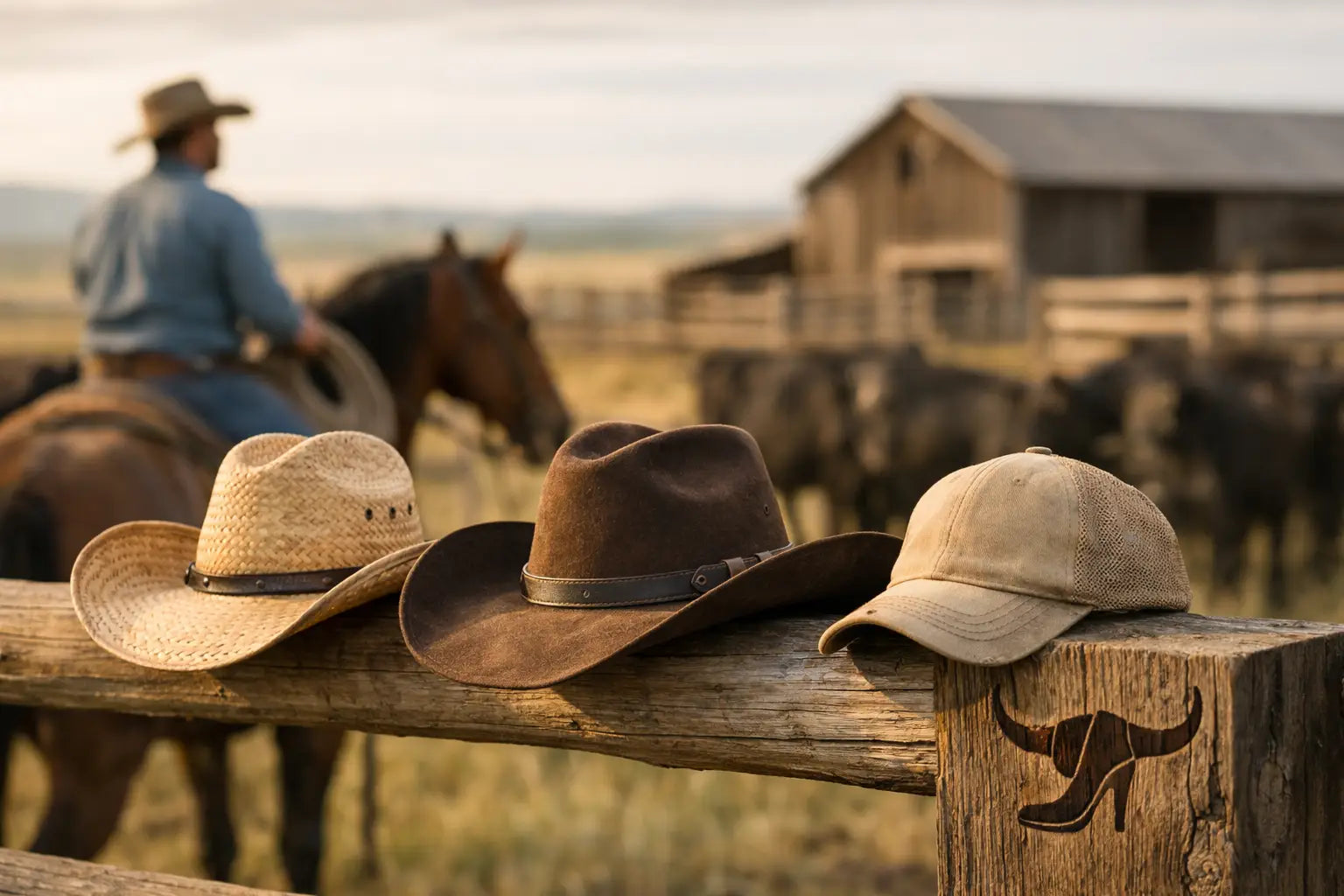

Best Hats for Ranch Work That Hold Up
June 16, 2026 6 min read
Sunup on a ranch does not wait for anybody, and neither does the weather. One hour you are feeding in a cold wind, by noon you are fixing fence under a hard Texas sun, and by evening you are loading stock with dust stuck to your face. That is exactly why the best hats for ranch work are not about looks first. They are about shade, fit, toughness, and staying on your head when the day gets rough.
A good ranch hat earns its keep. It protects your face and neck, cuts glare, keeps light rain off, and gives you one less thing to fight while you work. A bad one turns into a nuisance fast. It blows off in the wind, traps heat, loses shape, or feels like a headache by lunchtime. If your hat cannot handle sweat, sun, dust, and daily use, it does not belong in the pickup, the barn, or the saddle.
What makes the best hats for ranch work
The right ranch hat starts with function. You need a brim wide enough to throw real shade over your face, ears, and part of your neck. You need a crown that breathes well enough for the season you are in. And you need a fit that stays secure without feeling tight.
That sounds simple, but ranch work puts more demand on a hat than most people realize. You bend, lift, ride, drive, rope, stack, weld, and walk in the same day. A work hat has to move with you. It should not wobble every time you look down or shift every time the wind picks up.
Material matters just as much as shape. A hat that works in July may be miserable in January. One that handles dry heat may not be the one you want in wet weather. That is where a lot of folks go wrong. They buy one hat and expect it to cover every season and every job.
Straw hats for hot-weather ranch work
When heat is the main fight, straw is hard to beat. A quality straw hat gives you shade without trapping every bit of heat on your head. That makes it a strong choice for summer feeding, branding, fencing, and long days in open country.
The best straw hats for ranch work have enough structure to hold shape and enough ventilation to keep air moving. A firm straw usually lasts longer than a soft, flimsy one, especially if you are throwing it on the dash, hanging it on a fence post, or wearing it every day. Cheap straw may look fine at first, but it tends to crack, sag, or lose its shape fast under hard use.
Brim size matters here. A little extra brim can make a real difference during peak sun. Still, bigger is not always better. If the brim is too wide for your frame or your work, it can get in the way when you are handling gates, working in tight spaces, or checking cattle from the truck. Most ranch hands do best with a brim that gives solid shade but still feels balanced.
If you spend all day in high heat, straw usually wins on comfort. But it has limits. Heavy rain can ruin a cheaper straw hat, and a rough season of daily abuse may wear it out faster than felt.
Felt hats for cold, wind, and rougher weather
Felt earns respect because it can take a beating and still keep doing its job. In colder months, a good felt hat blocks wind better, holds warmth better, and usually lasts longer than straw. If you work through winter or spend early mornings horseback in cutting wind, felt starts making a lot more sense.
Wool felt can be affordable, but it is not always the best option for hard ranch use. It tends to absorb water more easily and can lose shape quicker than higher-quality felt. Fur felt, while more expensive, usually holds up better over time and handles weather more reliably. If you wear the same hat often and work in mixed conditions, paying for better felt can save money in the long run.
That said, felt has trade-offs. In real summer heat, it can get hot fast. It also needs more care if you want it to keep its shape and finish. A felt hat thrown around carelessly in a wet truck bed is not going to look or perform its best for long.
Choosing the right brim and crown
A ranch hat should work with your job, not just your style. Brim shape affects shade, wind resistance, and visibility. A flatter, wider brim can offer better sun coverage, while a more curved brim may handle wind a little better and feel less bulky in motion.
Crown shape is partly preference, but it also affects comfort and airflow. Some folks like a taller crown because it gives a little more room and ventilation. Others want a lower, snugger feel. The best choice is the one that fits your head naturally and does not create pressure points after hours of wear.
This is where trying on different shapes matters. Two hats can be the same size on paper and fit completely differently once they are on your head. If you are buying for ranch work, comfort is not optional. You will feel every bad fit by midmorning.
Fit is what separates a good hat from a truck ornament
If a hat is too loose, wind will expose it. If it is too tight, you will be counting the minutes until you can take it off. The best hats for ranch work sit secure and even, with no pinching across the forehead and no sliding around when you move.
Sweatbands help more than people think. A solid sweatband improves fit, adds comfort, and keeps sweat from running straight into your eyes. Over time, it also affects how the hat settles to your head. A quality sweatband can turn a decent hat into one you want to wear every day.
Do not assume you can fix a bad fit with habit. Ranch work is too physical for that. If the hat annoys you in the store, it will drive you crazy out in the wind and dust.
Weather should decide more than fashion does
A lot of folks keep more than one work hat for a reason. Ranch life changes with the season, and your hat should match the conditions. Straw for brutal heat, felt for cold and wind, and sometimes a backup for the days in between is a practical setup.
Rain changes the equation too. Some hats handle a surprise shower fine. Others do not. If your area gets regular wet weather, you need to think beyond appearance. The sharp-looking hat that wilts in rain is not much use when chores still have to get done.
Dust and sweat also wear a hat down over time. Light colors often reflect sun better and stay cooler, but they can show dirt faster. Darker hats may hide dust a little better, yet they can feel hotter under direct sun. There is no perfect answer. It depends on your climate, your workload, and how often you are willing to clean and maintain your gear.
The best ranch hat is not always the most expensive one
Price matters, but value matters more. A high-dollar hat makes sense if you wear it constantly and it holds up for years. A cheaper hat can be the smarter buy if it fits well, handles your season, and you do not mind replacing it sooner.
What does not pencil out is buying a hat for looks alone and then fighting it every day. A ranch hat is working gear. It should serve the same standard as your boots or your outerwear. If it cannot stand up to the job, it is the wrong piece of gear no matter how good it looks under arena lights.
That is also why brand reputation only goes so far. A trusted western brand can be a good starting point, but material, fit, and daily use still decide whether a hat is worth your money. For people who live this life, function speaks louder than marketing every time.
How to know you found the right one
The right hat feels natural fast. You are not adjusting it every ten minutes. It keeps the sun off your face, stays put in a breeze, and does not become the thing you notice most during the workday. That is a good sign.
It should also match the kind of work you actually do. If you spend your time horseback in open pasture, your needs may be different from somebody running equipment, repairing fences, and hauling feed all day. Both are ranch work, but they ask different things from a hat. Be honest about your routine and buy for that, not for a picture of what ranch life is supposed to look like.
At Horns & Heels Rodeo Company, that is the line that matters. Real western gear should be built around the life, not the costume.
The best hat is the one you reach for before daylight because you trust it to do its job. Get the fit right, choose the material for your weather, and let the miles decide the rest.
Subscribe
Sign up to get the latest on sales, new releases and more …