
Born at a Kitchen Table. Built in Texas.
Born at a Kitchen Table. Built in Texas.
Add description, images, menus and links to your mega menu
A column with no settings can be used as a spacer
Link to your collections, sales and even external links
Add up to five columns
Add description, images, menus and links to your mega menu
A column with no settings can be used as a spacer
Link to your collections, sales and even external links
Add up to five columns
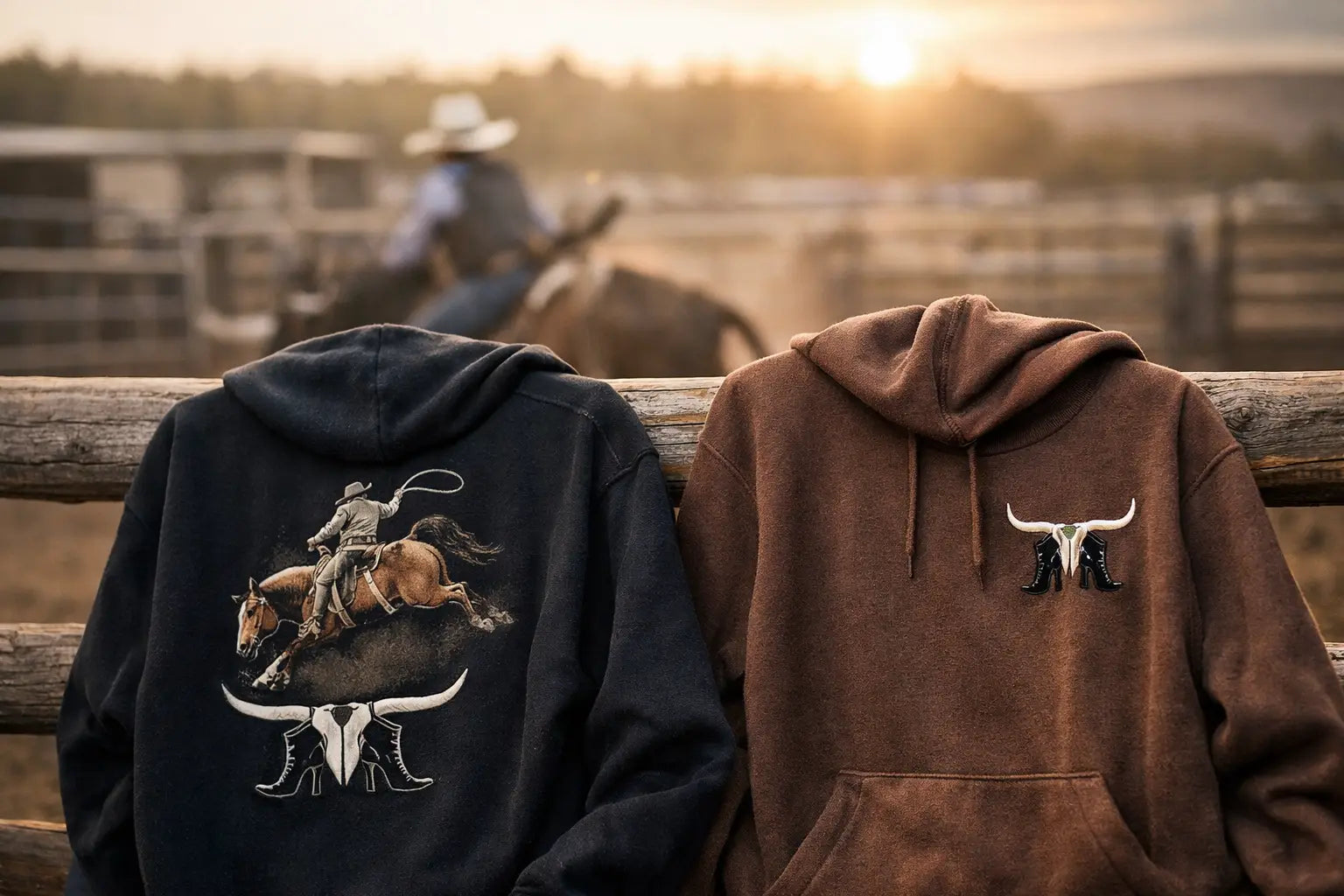

How to Choose Rodeo Hoodies That Last
June 14, 2026 6 min read
Cold mornings at the barn tell the truth fast. A bad hoodie rides up when you saddle, binds at the shoulders, or starts looking worn out before the season turns. If you want to know how to choose rodeo hoodies, start with one simple standard - buy for the life you actually live, not for a photo op.
A real rodeo hoodie has a job to do. It needs to pull its weight on early feed runs, under arena lights, in the truck, and in town after the work is done. That means the right one is not always the softest one on the rack or the loudest one on the screen. It is the one that fits your routine, your weather, and the way you move.
How to choose rodeo hoodies for real use
The first thing to look at is fabric weight. This matters more than most people think. Lightweight hoodies can feel good when the day starts cool and ends warm, especially in Texas and across the South where weather changes fast. But if you are out before sunup, standing around at a jackpot, hauling, or working through wind, a thin hoodie may not cut it.
Midweight hoodies are usually the safest bet for most rodeo folks. They give you enough warmth for daily wear without feeling bulky under a vest or jacket. Heavyweight hoodies have their place too, especially for winter events, cold bleachers, and long days outside. The trade-off is movement and layering. A hoodie that is too heavy can feel stiff or overbuilt if you are active all day.
Fabric blend matters just as much. Cotton feels natural and broken-in, and plenty of folks prefer it for comfort. The downside is that all-cotton hoodies can shrink, hold moisture, and lose shape faster if they take regular abuse. A cotton-poly blend usually gives you a better balance of comfort, durability, and shape retention. If your hoodie sees hard wear and frequent washing, blends often hold up better over time.
Fit should work in the saddle and on your feet
Rodeo hoodies are not made to just stand still in. They need to move with you. A good fit should leave room through the shoulders and chest without turning baggy through the body. If it gets tight when you reach forward, pull gates, lift feed, or rope, it is not the right fit no matter how good it looks folded up.
Sleeve length is a common miss. Too short and they creep up every time you work. Too long and they bunch at the wrists and get in the way. The waistband matters too. If it rides high every time you bend or sit, that gets old in a hurry.
Some folks like a trim fit for town and travel. Others want more room for layering over a tee or under a jacket. Neither is wrong. It depends on whether your hoodie is going to be your outer layer, a mid-layer, or your everyday grab-and-go piece. If you plan to wear it over work clothes, give yourself that extra room from the start.
Don’t ignore construction
This is where a lot of cheap hoodies fall apart. Literally. You can spot a weak hoodie by looking at the seams, cuffs, and pocket stitching. If those areas are light, loose, or poorly finished, they will show wear fast.
A rodeo hoodie should have solid ribbing at the cuffs and hem so it keeps its shape. The hood should not feel paper-thin or floppy. Drawstrings should be sturdy if the hoodie has them, and the kangaroo pocket should sit flat and feel anchored, not tacked on as an afterthought.
Print quality matters too. A good western hoodie should still look right after hard wear and repeated washes. If the graphic cracks badly, peels early, or fades into nothing, the hoodie did not earn its place. A bold design is fine, but it still has to hold up.
How to choose rodeo hoodies by season and setting
Not every hoodie needs to do every job. One for fall jackpots is not always the same one you want for winter ranch work or spring travel season.
For everyday use, a midweight hoodie with a dependable fit is hard to beat. It can handle cool mornings, arena evenings, and daily running around without being too much. For colder months, look for heavier fleece and enough room to layer underneath. If your winters stay mild, that same heavyweight hoodie may spend half its life in the truck instead of on your back.
Think about where you wear it most. If you spend a lot of time horseback, too much bulk in the hood or shoulders can get annoying fast. If you are mostly on the ground working pens, loading up, or walking fairgrounds, comfort and warmth may matter more than trim movement. If your hoodie has to go from stock show mornings to a burger stop in town, clean lines and a strong graphic start to matter a little more.
That is the real answer to how to choose rodeo hoodies - match the hoodie to the setting instead of expecting one piece to cover every mile of your life.
Pick a design that still looks like you next year
Western folks can spot fake from a ways off. The same goes for hoodies. If the design feels trendy, overdone, or disconnected from rodeo life, it usually will not last in your closet even if the fabric does.
A strong rodeo hoodie should look grounded. Clean logos, western lettering, rodeo-inspired graphics, and straightforward colors tend to wear better over time than novelty prints chasing a moment. Black, heather gray, navy, earth tones, and weathered western shades usually give you more mileage than something loud you get tired of fast.
That does not mean plain is the only answer. It just means your hoodie should feel like part of your life, not a costume. The best western gear looks right because it belongs there.
Women and men should both buy for movement first
A lot of people still make the mistake of buying by look alone, especially online. For women, a rodeo hoodie should allow room through the shoulders and arms without turning boxy or oversized in all the wrong places. For men, it should not pull across the back or chest when reaching and lifting.
The best fit is the one that handles motion naturally. You should be able to drive, carry, work, and sit in the stands without feeling like the hoodie is fighting you. If you have to keep adjusting it all day, it is not built for your life.
What separates a good rodeo hoodie from a cheap one
A cheap hoodie usually tells on itself after a few washes. It twists, shrinks, pills up, or loses its shape. The hood gets limp. The pocket stretches. The cuffs give out. And the graphic that looked sharp at first starts breaking down before the season is over.
A good one keeps its shape, keeps its color, and keeps earning wear. It feels better after it is broken in, not worse. That is worth paying attention to, because value is not about the cheapest price. It is about how many real days you get out of it.
That is also why local production and honest materials matter. Brands rooted in western life tend to understand the difference between apparel made for a real routine and apparel made to imitate one. At Horns & Heels Rodeo Company, that difference means something. Folks who live this life can tell.
A few final checks before you buy
Before you settle on a hoodie, picture where it is going to earn its keep. Think about the weather you actually deal with, how you layer, how hard you are on clothes, and whether you need warmth, flexibility, or both. Look closely at fabric weight, fit, seam quality, and graphic durability.
Most of all, be honest about what you wear repeatedly. The best rodeo hoodie is not the one with the most flash. It is the one you reach for before daylight because you trust it to do the job, look right, and last longer than one hard season.
Buy the hoodie that fits your life the same way you live it - with purpose, grit, and no need to fake a thing.
Subscribe
Sign up to get the latest on sales, new releases and more …