
Born at a Kitchen Table. Built in Texas.
Born at a Kitchen Table. Built in Texas.
Add description, images, menus and links to your mega menu
A column with no settings can be used as a spacer
Link to your collections, sales and even external links
Add up to five columns
Add description, images, menus and links to your mega menu
A column with no settings can be used as a spacer
Link to your collections, sales and even external links
Add up to five columns
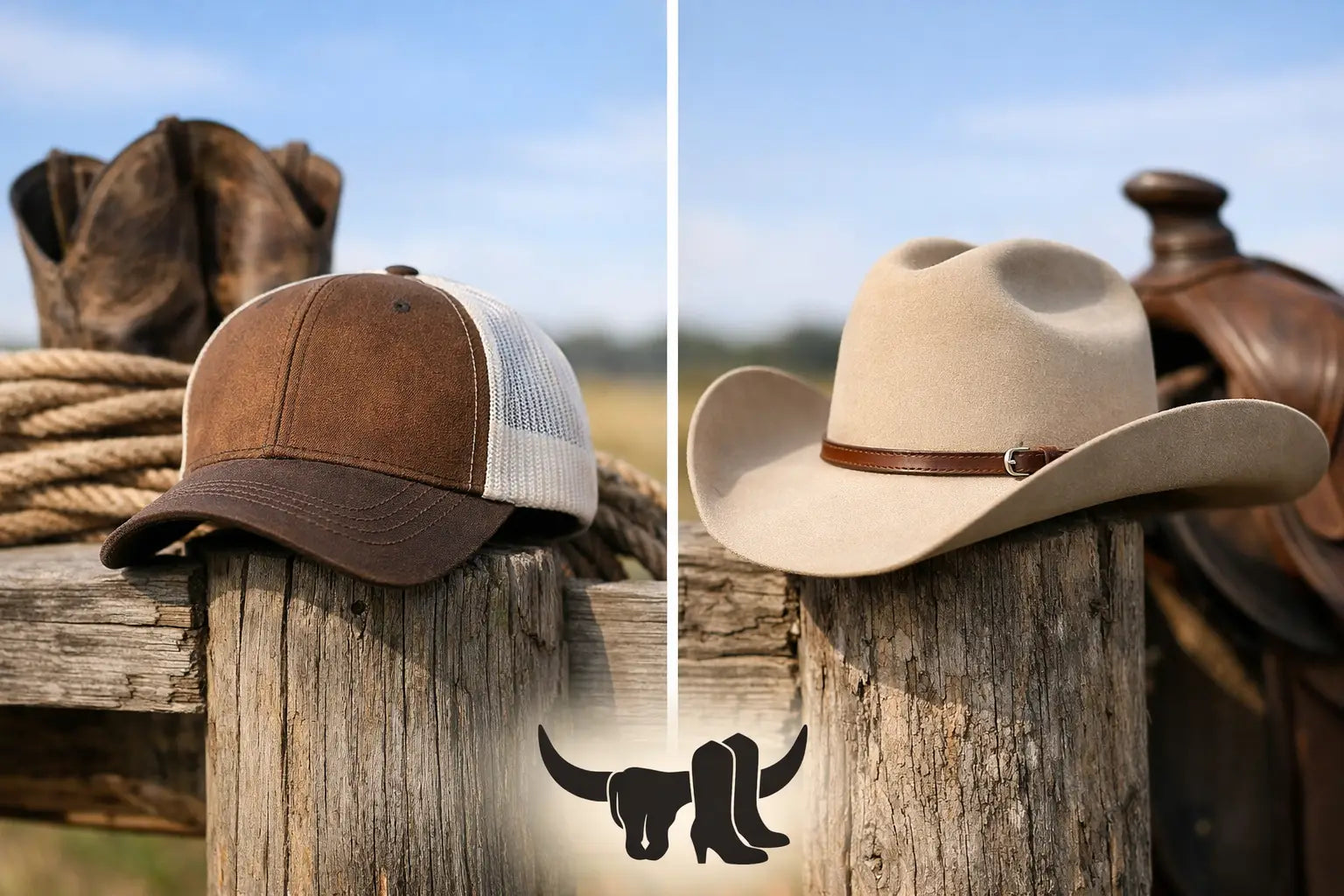

Western Caps vs Cowboy Hats
June 24, 2026 6 min read
Walk into a feed store, a rodeo, or a small-town café in Texas and you can read a lot about a person by what’s on their head. That’s why western caps vs cowboy hats is not some fashion debate dreamed up by people who have never fixed fence, hauled feed, or backed into a trailer before sunrise. It’s a real choice, and for folks who live this life, the right headwear matters because it has to work as hard as you do.
A lot of people act like one replaces the other. It doesn’t. A western cap and a cowboy hat do different jobs, send different signals, and fit different parts of your day. If you spend your time between the ranch, the arena, the jobsite, and town, chances are you need to know when each one earns its place.
Western caps vs cowboy hats: what really sets them apart
The biggest difference is simple. A cowboy hat is built around coverage, structure, and western tradition. A western cap is built around ease, speed, and everyday wear. One has a full brim and a shaped crown. The other has a bill, a lower profile, and usually a softer, more casual fit.
That sounds obvious, but the gap goes deeper than shape. A cowboy hat protects more of your face, ears, and neck from sun and light rain. It also carries weight in western culture that a cap never will. A good hat says you know where you come from, and you’re not wearing western gear as a costume.
A western cap, on the other hand, wins on convenience. You can throw it on fast, stuff it behind the truck seat, wear it while driving, and not think twice. It handles sweat, dust, and daily errands without asking for much. If your day starts before daylight and doesn’t slow down until after dark, that matters.
Why cowboy hats still hold their ground
There’s a reason the cowboy hat has not gone anywhere. It wasn’t built for looks first. It was built for country that doesn’t care how tough you think you are.
Out in open sun, the wider brim does real work. It shades your eyes better than a cap, covers more skin, and cuts glare in a way you feel by noon. If you’re horseback, working pens, checking cattle, or standing around the arena for hours, that extra coverage is worth having. In light weather, a felt or straw cowboy hat also gives you more protection than a cap ever will.
Then there’s the matter of presence. A cowboy hat carries authority because it’s tied to work, tradition, and skill. In rodeo, at a stock show, at church, at a dance hall, or during anything formal in western culture, a cowboy hat still means something. It tells people you understand the code.
That said, cowboy hats ask more from you too. They need proper fit. They need care. They take up space. You don’t toss a good hat on the floorboard with a chain, a drill battery, and an old pair of gloves unless you want it looking like a wreck. If you wear one, you need to wear it like it belongs to you.
When a cowboy hat is the better choice
If you’re going to be in direct sun for long stretches, a cowboy hat is usually the smarter pick. The same goes for rodeo nights, western events, and any setting where the tradition matters as much as the function. It also works better when you want a cleaner, sharper western look than a cap can give.
But the trade-off is real. In hard wind, cramped cabs, or fast-moving work where you’re in and out of equipment all day, a cowboy hat can feel like more gear to manage.
Where western caps earn their keep
A good western cap is about practicality. It’s the grab-and-go option for the days that don’t need ceremony. It works when you’re feeding in the morning, making a parts run, welding in the shop, or heading into town without wanting to think about your headwear at all.
Caps also play better with certain kinds of work. If you spend time under hoods, inside barns, in trucks, on tractors, or around equipment, a cap is low-profile and easy. It won’t knock into everything. It doesn’t need a dedicated spot. It can take sweat and dirt, and if it gets beat up, that usually just means it’s doing its job.
For a lot of folks, the western cap is the everyday piece and the cowboy hat is the statement piece. That doesn’t make the cap less western. It just means western life has always been about using the right gear for the moment, not proving something to strangers.
When a western cap makes more sense
If you’re driving a lot, moving between tasks, or working in tighter spaces, a western cap is usually easier to live in. It also makes sense in hotter conditions where breathability matters and in situations where you want western identity without the formality of a full hat.
A cap is also a solid option for people who are new to western wear but want something authentic and wearable. It’s lower commitment, easier to fit, and simple to pair with the rest of your gear.
Fit, comfort, and weather matter more than trends
One of the biggest mistakes people make in the western caps vs cowboy hats conversation is treating it like a style contest. The better question is what kind of day you’re walking into.
If it’s bright, open, and dry, a cowboy hat gives you more coverage. If it’s a long haul in and out of the truck, a cap is often less hassle. If the wind is acting up, either one can become a problem depending on fit. A loose cowboy hat will leave your head quick. A cheap cap will ride high, trap heat, and feel miserable by lunchtime.
Material matters too. Straw cowboy hats are built for heat and summer wear. Felt hats carry better through cooler weather and more formal settings. Caps vary by fabric and construction, but the best ones balance structure with breathability. A stiff, heavy cap in August is no gift.
Comfort comes down to honest use. If you’re always taking your hat off because it’s in the way, it’s the wrong choice for that job. Good gear should support the work, not distract from it.
The cultural side of western caps vs cowboy hats
This part matters, whether people say it out loud or not. A cowboy hat still carries stronger cultural weight than a cap. In western country, it’s tied to respect, tradition, and the way generations before us lived and worked. You don’t have to romanticize it to admit it means something.
A western cap speaks a little differently. It leans more everyday, more workmanlike, more casual. It can still be proud, still be rooted, still be fiercely western, but it does not carry the same formal presence. That’s not a knock on the cap. It’s just the truth.
The right call depends on where you are and what the moment asks for. At some events, a cap feels underdressed. In other settings, a cowboy hat can look forced if you’re clearly wearing it for image instead of habit. Folks can spot the difference fast.
That’s why authenticity matters more than trying to impress anybody. Wear what fits your life. If your cowboy hat is part of your daily rhythm, that shows. If your cap is the thing that sees the most miles because it matches the work, that shows too.
So which one should you wear?
If you want one answer for everybody, you won’t get it here. The honest answer is both have their place.
Choose a cowboy hat when you need better sun coverage, when tradition matters, or when the setting calls for a stronger western presence. Choose a western cap when the day is more about movement, convenience, and hard daily use. A lot of people who live this life keep both close because one doesn’t cancel out the other.
That’s the real point. Western gear was never supposed to be about chasing trends or building a social media costume. It’s supposed to fit the life in front of you. At Horns & Heels Rodeo Company, that idea still means something because real western wear should look right, feel right, and hold up when the day gets long.
If you’re choosing between a cap and a hat, don’t ask what looks more western to people on the outside. Ask what you’ll still be glad to be wearing by the time the work is done.
Subscribe
Sign up to get the latest on sales, new releases and more …