
Born at a Kitchen Table. Built in Texas.
Born at a Kitchen Table. Built in Texas.
Add description, images, menus and links to your mega menu
A column with no settings can be used as a spacer
Link to your collections, sales and even external links
Add up to five columns
Add description, images, menus and links to your mega menu
A column with no settings can be used as a spacer
Link to your collections, sales and even external links
Add up to five columns

Western Hats for Everyday Wear That Work
June 26, 2026 6 min read
A good hat tells the truth before you say a word. Not in a flashy, look-at-me way. In a steady way. It says you know what long days feel like, you care how your gear holds up, and you are not dressing for a costume party. That is exactly why western hats for everyday wear matter - they have to carry real life, not just a western look.
The problem is a lot of people buy the wrong hat for the wrong reason. They pick one because it photographs well, then wonder why it ends up on a truck seat more than on their head. Everyday wear is a different standard. If a hat is going to ride with you from feed store runs to Friday night dinner, from the arena to the gas station to the back pasture, it has to be comfortable, durable, and honest.
What makes western hats for everyday wear different
A hat you wear every day has one job above all else - it has to disappear once it is on your head. That means no constant adjusting, no hot spots on your forehead, no brim that feels awkward every time the wind picks up. You should notice the shade, the fit, and the protection. You should not be thinking about the hat itself every ten minutes.
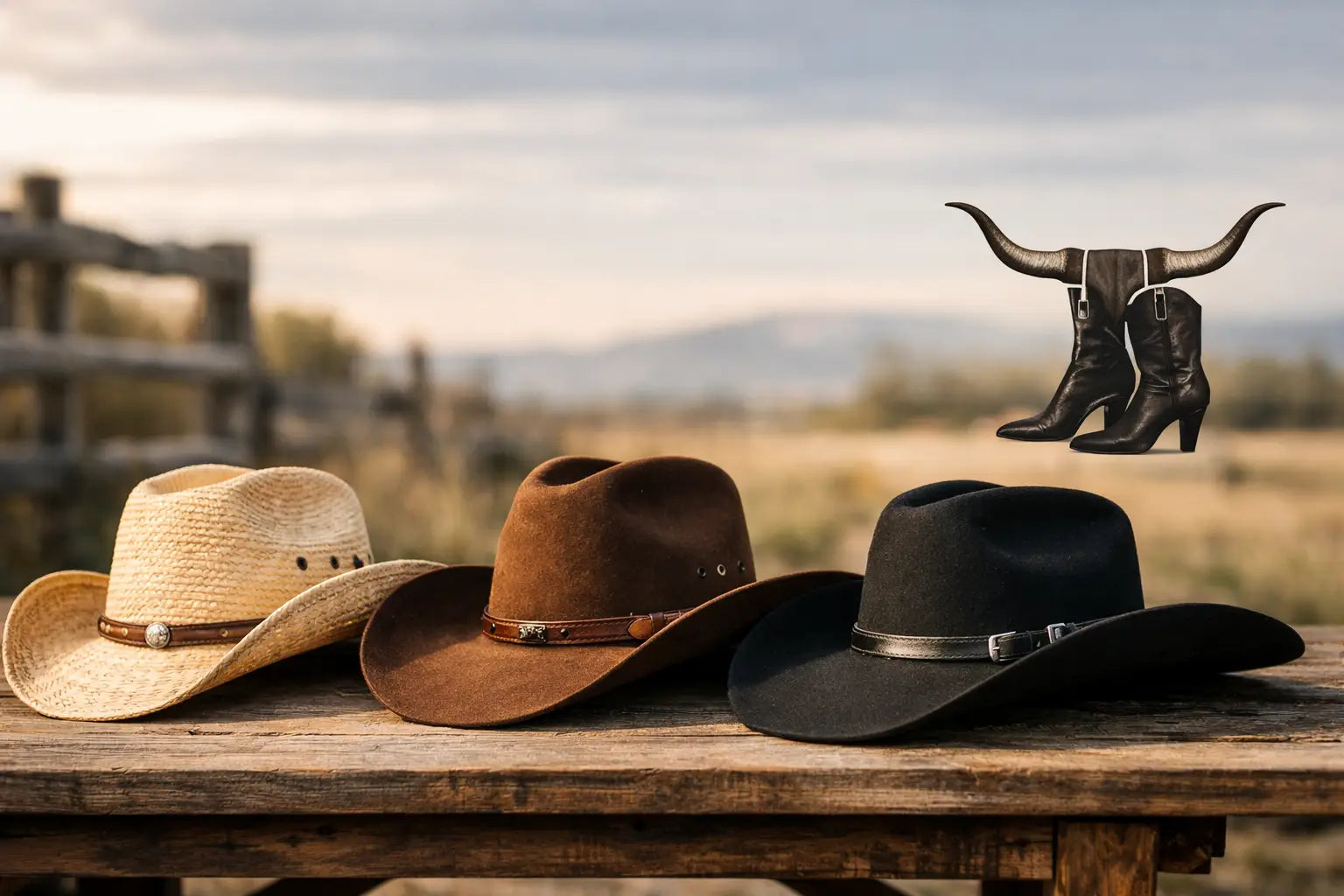
That usually comes down to material, shape, and where you actually spend your time. If you are outside most of the day, a lightweight straw hat makes a lot of sense through the hotter months. It breathes better, dries faster, and feels easier on long days. If your routine leans more toward cool mornings, winter chores, or regular wear through the fall and cold season, felt earns its place. Felt holds shape better, blocks weather better, and gives you a more substantial hat when the air turns sharp.
There is also the question of image, but not in the shallow sense. A hat does signal something. Around rodeo, ranch country, and blue-collar towns, people can tell when somebody is wearing gear because they live in it and when they are wearing it because they saw it online last week. The difference is usually not price. It is whether the hat fits the life.
Start with where the hat needs to go
The easiest way to buy right is to think through your week, not your mirror. If you need one hat to pull duty from work to town, do not choose the biggest brim or the most dramatic crown in the stack. A more balanced shape tends to wear better across different settings. It will still read western, but it will not feel oversized when you step inside a cafe, hardware store, or church.
For a lot of folks, everyday means mixed use. Maybe you work outside, maybe you commute in a truck, maybe you spend weekends around stock or at jackpots, and maybe you still want something clean enough to wear out that night. In that case, a hat with moderate brim width and a crown shape that does not lean too hard into show style usually gets the most miles.
If most of your day happens under open sky, function should win every time. Wider brims throw more shade and can make a long summer day a lot more manageable. If you are in and out of vehicles, barns, shops, or tighter spaces, too much brim can get old in a hurry. There is no single right answer. There is only the right hat for the way you actually live.
Straw or felt for daily use
This is where people tend to overcomplicate things. Straw is not lesser than felt. Felt is not always better. They just solve different problems.
Straw is built for heat, sun, and airflow. It is the natural choice when summer hits hard or when your work keeps you outdoors for hours at a time. A good straw hat feels lighter, cooler, and easier to live in day after day. The trade-off is that straw usually takes more of a beating from rough handling, especially if it is constantly getting crushed, soaked, or tossed around.
Felt brings structure and seasonality. It is the hat you lean on when weather turns, when mornings start cold, or when you want a cleaner look that still feels grounded. It tends to carry a little more weight and warmth, which can be a benefit or a drawback depending on the month. For true everyday use, many western folks end up needing both - straw when the sun is punishing, felt when the year cools off.
That is not about building a collection for show. It is about wearing the right tool for the conditions.
Fit matters more than brand talk
You can have the best-looking hat in Texas, and if it does not fit right, you will hate wearing it. Fit is what separates a hat you admire from a hat you reach for every morning.
A proper fit should feel secure without squeezing. It should sit level and stay put when you move, but not leave you counting the minutes until you can take it off. Too tight and you will feel pressure across your forehead. Too loose and every gust of wind turns into a problem. Both make a hat feel like work in the worst way.
There is also a break-in period people forget about. Some hats settle in and become yours over time. That is normal. But a terrible fit does not become a good fit through wishful thinking. If it is wrong from the jump, it will stay wrong.
Sweatbands matter here too. They are not glamorous, but they make a difference in comfort, especially if you wear your hat hard. A decent sweatband helps with fit, absorbs moisture, and keeps daily wear from feeling rough by noon.
Shape should match your life, not trends
Some hat shapes look sharp in a staged photo and feel ridiculous by the second day of real use. That is why trend-chasing rarely works in western wear. Real western style has always been tied to purpose.
If you are choosing a hat for everyday use, go with a shape you will not get tired of. Clean lines. A brim that gives you coverage without getting in the way. A crown that suits your face and your routine. You do not need the loudest profile in the room. You need one that works with your truck, your gate, your job, and your weekend.
That is true whether your style leans ranch, rodeo, or just plain hard-working rural. The best hats do not beg for attention. They earn it.
Color, wear, and the reality of daily use
Light colors reflect heat better in warm months, which is one reason lighter straw hats stay popular through summer. Dark felt can look sharp in cooler weather and tends to hide some marks better, but every hat shows its life eventually. That is not always a bad thing.
A daily hat is going to pick up sweat, dust, weather, and miles. If you expect it to stay box-fresh forever, you are buying the wrong kind of gear. There is a difference between worn-in and worn-out, though. A hat should age with character, not collapse because it was cheaply made or badly chosen for the job.
That is why quality construction matters. Strong stitching, dependable banding, and materials that hold shape all count more than trendy details. Horns & Heels Rodeo Company understands that western gear should be built for people who wear it, not people who only pose in it.
How to know a hat is really an everyday hat
The test is simple. You stop saving it for the right moment.
An everyday western hat ends up by the door, in the truck, on the fence post, or right where you left your gloves because it has become part of your routine. You grab it without overthinking. It works with a pearl snap, a hoodie, a work jacket, or a plain tee. It can handle a little weather. It still looks right in town. It feels like you.
That kind of versatility is worth more than a hat that only comes alive two nights a year. Everyday wear asks more from a hat, but it also gives more back. When you find the right one, it becomes part of your rhythm.
Buying better means being honest
Most bad hat purchases come from fantasy. People buy for the life they want to project, not the one they live from Monday through Sunday. There is nothing wrong with wanting a sharp hat. But if you need all-day comfort, weather practicality, and something that holds up around real work, buy with clear eyes.
Think about heat. Think about season. Think about whether you spend more time under sun, behind a wheel, in the stands, at the barn, or walking into town. The right answer may be a straw hat now and a felt later. It may be one dependable shape instead of three flashy ones. It may be a little plainer than what first catches your eye. Plain is not boring when it works.
A good western hat does not need to prove itself with extra noise. It just needs to fit right, wear right, and keep showing up. Pick one that can handle your real life, and you will not have to force it into your wardrobe. It will already belong there.
Subscribe
Sign up to get the latest on sales, new releases and more …